From “I hate this subject” to an A: an NUS DTK1234 Design Thinking case study
Davis, an NUS maths major, was stuck on a DTK1234 human-centric design task he did not understand. Here is exactly how we quoted, built, revised and landed him an A, for S$70.

By Rachel Ng
NTU Business graduate · 6 min read · 28 Jun 2026
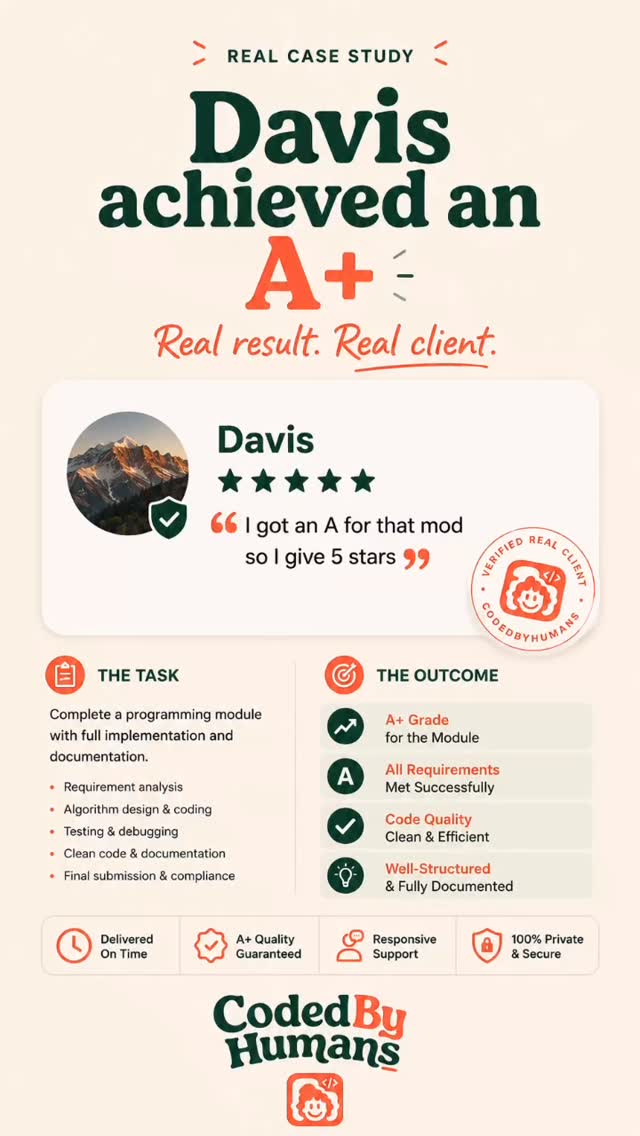
Davis is a maths major at NUS. Like a lot of STEM students, he got blindsided by DTK1234, a design-thinking module that asks you to reflect on “human-centric design” in a way that feels miles away from equations. His first message to us was refreshingly honest: he had no idea what the assignment wanted, and he hated the subject. Six days and one collaborative revision later, he messaged back to say he got an A.
The task: make design thinking “engaging to your discipline”
The brief was a DTK1234 “Wrap-Up Segment” ILA: an individual learning activity that asks you to introduce human-centric design, in an engaging way, to students in your own discipline. No study notes, no worked examples, just a course guide and a single academic reading. For a maths student who “just wanted it over with”, that open-endedness is exactly what makes it painful.
That whole exchange, from “hi” to work-in-progress, took 46 minutes. It is how all our assignment help in Singapore works: an honest quote, a 50% deposit to start, and the rest only once the work is in your hands and you are happy with it. No accounts, no upfront-in-full, no risk.
What we built
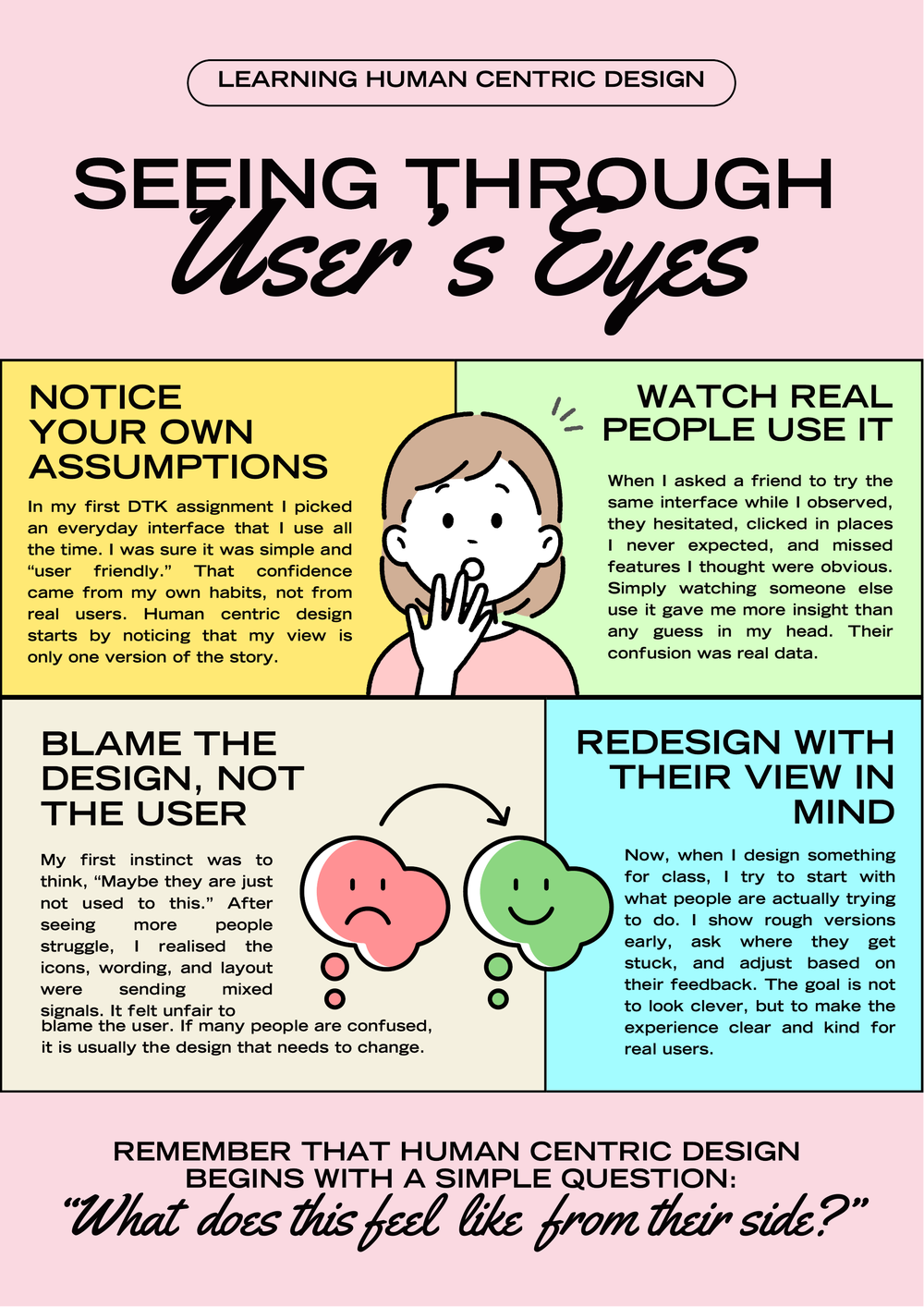
Rather than a wall of text, we turned the reflection into a clean, teachable infographic: “Seeing Through User’s Eyes.” It breaks human-centric design into four honest moves a student can actually remember, notice your own assumptions, watch real people use the thing, blame the design not the user, and redesign with their view in mind. It looks like something you would happily stand up and present.
The part most services skip: the revision
When we sent the first draft, Davis read the brief again and spotted something: it asks you to teach the idea to students in your discipline, and the poster was generic. A lot of “assignment mills” would argue with you here. We just fixed it, for free, and worked out the angle together.
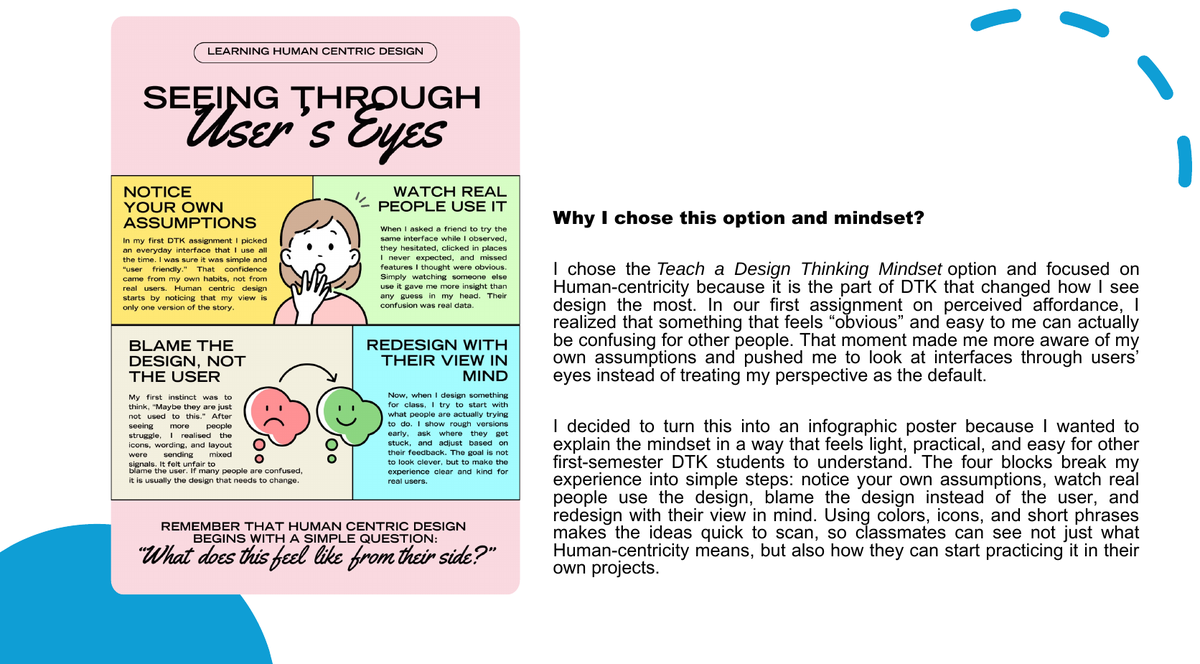
The revised version keeps the “what is human-centric design” poster, then adds a second panel that teaches it through a real maths context, plus a short first-person reflection on why he chose that mindset. That is the bit the module actually grades: your own voice, your own discipline, your own takeaway.
The result
“I got an A for that mod so I give 5 stars.”
Why this went well
A fast, honest quote (S$70, deposit only), a deliverable that looked hand-made because it was, and a free revision handled as a collaboration instead of an argument. That is the whole model: real people, real accountability, and we only win when you do. The same model runs through all our help for NUS modules, from design-thinking reflections to School of Computing code.
Frequently asked questions
Can you help with NUS DTK1234 and other design-thinking modules?
Yes. Reflection ILAs, infographics, storyboards and wrap-up segments are exactly what this case covers. We match you with a real graduate, frame it for your discipline, and revise for free until it fits the brief.
How much does a task like this cost?
This one was a flat S$70 with a 50% deposit to start and the rest only once Davis was happy. Most single assignments sit under S$100. Send the brief for an exact quote.
Is the work really human and Turnitin-safe?
Yes. Every piece is written or designed by a real Singapore graduate, never AI, so there is nothing for Turnitin’s AI detector to flag. Flagged by any detector? We redo it free, in writing.
Need this done by a real human?
Essays, code, and software written by graduates, never by AI. Turnitin-safe, guaranteed.